Greed and Capitalism

What kind of society isn't structured on greed? The problem of social organization is how to set up an arrangement under which greed will do the least harm; capitalism is that kind of a system.
- Milton Friedman

Thursday, May 23, 2019

Inside John Mack's Strategy to Save Morgan Stanley


Oct. 8 -- Former Federal Reserve Chairman Ben Bernanke and Former Morgan Stanley Chairman and CEO John Mack discuss the 2008 financial crisis. They speak on "Bloomberg ‹GO›."

-- Subscribe to Bloomberg on YouTube:
http://www.youtube.com/Bloomberg


Bloomberg Television offers extensive coverage and analysis of international business news and stories of global importance. It is available in more than 310 million households worldwide and reaches the most affluent and influential viewers in terms of household income, asset value and education levels. With production hubs in London, New York and Hong Kong, the network provides 24-hour continuous coverage of the people, companies and ideas that move the markets.


Inside John Mack's Strategy to Save Morgan Stanley


Oct. 8 -- Former Federal Reserve Chairman Ben Bernanke and Former Morgan Stanley Chairman and CEO John Mack discuss the 2008 financial crisis. They speak on "Bloomberg ‹GO›."

-- Subscribe to Bloomberg on YouTube:
http://www.youtube.com/Bloomberg


Bloomberg Television offers extensive coverage and analysis of international business news and stories of global importance. It is available in more than 310 million households worldwide and reaches the most affluent and influential viewers in terms of household income, asset value and education levels. With production hubs in London, New York and Hong Kong, the network provides 24-hour continuous coverage of the people, companies and ideas that move the markets.


Tuesday, May 7, 2019

Batman


't u r q u o i s e b r e a t h i n g ' 📷: © Ken Koskela Morning on the Li River, Guilin China


Kabukiza, Tokyo, 2003 Hiroshi Watanabe 


Money Laundering using PayPal


Carole Cadwalladr‏Verified account @carolecadwalla 12h12 hours ago

More


..and it’s not just the undisclosed donor. It’s the thousands of dark micropayments via PayPal. This is a well-known money laundering device. And there are no safeguards in place to ensure these are legitimate. Can you prove they are @nigel_farage?


Monday, May 6, 2019

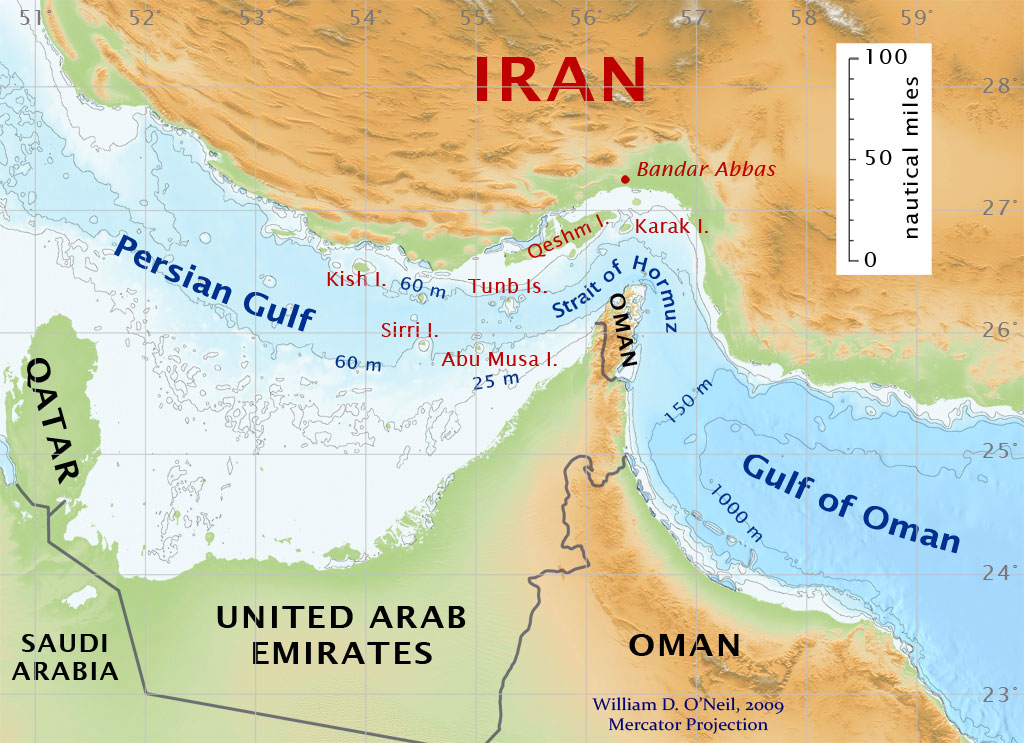
Strait of Hormuz: 5 key facts


Strait of Hormuz: 5 key facts

Iranian Army soldiers stand guard on a military speed boat during the 'Velayat-90' navy exercises in the Strait of Hormuz in southern Iran on December 28, 2011.
Credit: ALI MOHAMMADI
These days, the Strait of Hormuz is like a a child of divorce caught between two angry parents. Not exactly a fun position to be in. But what exactly is the Strait of Hormuz, and why are the United States and Iran engaging in a back-and-forth war of words over it? Here are five key facts about it.
5. It is a narrow strait located between the Gulf of Oman and the Persian Gulf. Iran borders the Strait of Hormuz to the north, and the United Arab Emirates and Oman's Musandam Peninsula border it to the south. See the map in the slideshow above.
4. Much of the Persian Gulf relies on the Strait of Hormuz to export its petroleum and reach the ocean, making it one of the world's most important oil supply routes.
3. About 15 million barrels of crude oil pass through the Strait of Hormuz on a typical day. About a fifth of the world's oil supply goes through the strait.
2. The strait is 21 miles wide at its narrowest point, and despite Iran's threats, it has never managed to cut it off completely to traffic.
1. Close to 300 people died in the Strait of Hormuz in 1988 when a US Navy missile cruiser, USS Vincennes, shot down an Iran Air Airbus A300 passenger jet over it.

How Great a Concern?

Iranian threats to close the Strait of Hormuz

by William D. O'Neil

For thirty years and more, Iran has periodically threatened to punish its enemies by closing the Strait of Hormuz to tanker traffic, thus cutting off much of the world's oil supply and presumably driving prices to record heights. The Iranians actually attempted a partial closure (against Iraq and Arab states supporting it in its war with Iran) in 1987-88, but the effects came nowhere near what they had hoped – the attacks did relatively limited economic damage to the Arabs but prompted an American intervention that was costly to Iran.
Nevertheless, concerns about the threat persist. In a recent article, Caitlin Talmadge outlined a scenario under which, as she saw it, Iran could plausibly close the Strait for a month or more and do very serious economic damage. ["Closing Time: Assessing the Iranian Threat to the Strait of Hormuz," International Security 33, No. 1 (Summer 2008): 82-117.] This would be accomplished by a combination of extensive mine fields in combination with attacks by antiship missiles launched from sites ashore. A massive and very costly American effort would be necessary to re-open the Strait, she predicts.
In response, I published an analysis which questions some of Talmadge's key assumptions and assertions. ["Costs and Difficulties of Blocking the Strait of Hormuz,International Security 33, No. 3 (Winter 2008/2009): 190-5.] This is a brief summary of what I say there.

Costs

The first thing to bear in mind about closing the Strait is how much damage it would do to Iran and its interests even to try. A threat against the oil traffic is a threat against every oil user which would be bound gain Iran all but universal enmity. In such a situation Iran's enemies, and particularly the United States, would enjoy largely a free hand to act as they saw fit to break the blockade, and do what injury they chose to Iran in the process. Iran could find itself entirely stripped of air and naval defenses in the wake of U.S. strikes. The United States would probably find it necessary to seize many of the Iranian and Iranian-occupied islands in the Persian Gulf, and would scarcely be in any hurry to return them. The military bases and commercial facilities around Bandar Abbas would no doubt be extensively damaged and perhaps even occupied.
Moreover, the one state whose oil traffic would most assuredly be seriously affected is Iran. American naval forces effectively control the seas throughout the region and could block all ships carrying oil or oil products to or from Iran. Not only would this cut off most of the revenues of the Iranian government and most of the nation's foreign exchange, but Iran actually depends on imports for many critical petroleum products, due to its mismanagement of its own resources. Even the limited flow of oil through pipelines would not necessarily be safe from U.S. precision-weapons attacks.

Mines

The Strait of Hormuz and the waters of the Persian Gulf to the west of it are a good deal too broad and deep to permit them to be closed with a handful of mines, as often has been suggested – see the map of the area. In order to close traffic, it is necessary to mine all the waters lying between the 25-meter depth curves, a span of about 25 miles.
Talmadge suggests that Iran could accomplish this with a few hundred mines laid by a combination of submarines and surface craft over a period of about a week. This is little doubt that Iranian mining efforts could be a very serious nuisance, but there are factors which work to limit potential effectiveness a good deal, especially the following:
  • It is highly likely that U.S. surveillance would discover the mining before it had gone far, giving the Americans full justification to open hostilities as they chose.
  • Surveillance would reveal the locations of fields, greatly improving the effectiveness of mine clearance.
  • It is not necessary to clear the entire 25 mile width to permit resumption of traffic – a comparatively narrow channel is all that is needed. It is most likely that the U.S. Navy, assisted by Arab state forces in the Gulf, could accomplish this in few days.
  • Merchant mariners and shipowners have always been ready to sail in harm's way as long as there was adequate compensation for doing so. There is no reason to expect that they would shrink from the risks of Iranian threats as long as they have naval protection.

Missiles

The antiship missile problem must be seen in an end-to-end perspective. The weak points in such systems have always been in their methods for finding targets in the first place and guiding the missile to a hit. Destroying or neutralizing these capabilities will quickly make antiship missiles ineffective, even if it proves difficult to destroy the missiles themselves (as it very well could).
  • The only feasible way for the Iranians to detect and locate targets is with radars. Since these must announce their position they can fairly quickly be located and destroyed, even if they are mobile and move frequently.
  • Even before the radars can be destroyed, their effectiveness can be greatly reduced by jamming.
  • Even without attacks and jamming, the environment in the region of the Strait of Hormuz is generally unfavorable for radar due to massive clutter as well as frequently difficult propagation conditions, resulting in many missed detections and false tracks.
  • A missile with a radar seeker will also be affected by clutter, and this will serve to make relatively simple countermeasures more effective in diverting the missile from its intended target.
  • The propagation environment in this area also is poor for infrared (IR) missile seekers, again increasing the effectiveness of countermeasures.
  • U.S. and allied warships armed with anti-air missiles would provide an added layer of protection by shooting down many incoming antiship missiles.

Summing up

An attempt by Iran to close the Strait of Hormuz would involve tragic costs, but most of them would be paid by Iran. As long as the United States and its allies in the region remain alert to the threat and maintain adequate precautions there is little reason to fear catastrophic consequences.
Copyright © 2009, 2010 by William D. O'Neil
8 February 2009, updated 13 January 2010


Wednesday, May 1, 2019

Tips for Journalists that Never Go Out of Style


40 Time-tested Tips for Journalists that Never Go Out of Style

By Jezzamine Andaquig on October 10, 2017


1. Always get the name of the dog.

2. Better to get it right than get it first.


3. Trust is our most important asset.

4. Endure the awkward silences in interviews.

5. Avoid clichés.

6. Pick up the damn phone.

7. And get out of the damn office.

8. Only quote when paraphrasing doesn’t do a better job.

9. With multimedia: complement, don’t repeat.

10. Know your equipment before you hit the field.

11. Give credit and thanks for user submissions.

12. Follow the money.

13. Ask open-ended questions.

14. Keep asking yourself: what is the story REALLY about?

15. Get good natural sound.

16. Experiment and take risks.

17. Capture more b-roll than you think you need.

18. When the eye and the ear compete, the eye wins.

19. Better to coach writers than fix broken stories.

20. Reports are about information; stories are about experience.

21. Arrive early, stay late.

22. Don’t let the powerful answer in the passive voice: “Mistakes were made.”

23. The best quote often comes after the reporter closes the notebook.

24. Journalism is a discipline of verification, not assertion.

25. Good writing is not magic, it’s a process.

26. Great journalism comes at the intersection of craft and opportunity.

27. Take responsibility for what readers know and understand.

28. Each reader brings an autobiography with them to a story.

29. In a nut graph, it’s not the graph that’s important, but the nut.

30. Place the emphatic word in a sentence at the end.

31. The antidote to procrastination is rehearsal.

32. Show AND tell.

33. Get a good quote high in the story.

34. Express your most important idea in the shortest sentence.

35. The most powerful form of punctuation is white space.

36. Write early to learn what you still need to learn.

37. Tell the audience what you know—and how you know it.

38. Don’t just interview the boss, talk to the mechanic.

39. To find stories, take a different route home.

40. If your mother says she loves you, check it out.


Source: https://www.poynter.org/40-time-tested-tips-journalists-never-go-out-style


Friday, April 26, 2019

Twitter - TWTR


The Twitter logo and hashtag '#Ring!' is displayed on a mobile device.
Bethany Clarke | Getty Images

The Twitter logo and hashtag '#Ring!' is displayed on a mobile device.

Investors should buy Twitter shares on rising usage trends


5 Refreshing Lessons From Elizabeth Warren's Personal Finance Book


MONEY
04/24/2019

5 Refreshing Lessons From Elizabeth Warren's Personal Finance Book


She wrote 'All Your Worth' in 2005. Here's how her advice holds up nearly 15 years later.


By Casey Bond, HuffPost US

BLOOMBERG VIA GETTY IMAGES
Warren promised no quick fixes in the book she wrote about handling money -- just diligence, patience and common sense.


Before Elizabeth Warren became known as Massachusetts’ outspoken Democratic senator and long before she was running for president, she was writing books about money.

Warren spent years as a lawyer specializing in bankruptcy before becoming a Harvard law professor and then devoting her time fully to politics. So it’s safe to say she knows the topic.

Warren and her daughter Amelia Warren Tyagi, a financial consultant with an MBA from the Wharton School at the University of Pennsylvania, co-wrote “The Two-Income Trap” in 2003, which sought to explain why so many middle-class families struggle financially. It became a best-seller, and the pair soon followed up with “All Your Worth: The Ultimate Lifetime Money Plan,” a book that outlines six steps for eliminating your financial woes largely based on the 50/30/20 budgeting rule.

There’s debate as to whether Warren actually invented the 50/30/20 rule, but she certainly popularized it with “All Your Worth.” However, while her budgeting system is the core of this book, there are other important takeaways, too, that often challenge common personal finance beliefs.

Here’s a look at some of the important ― and unexpected ― lessons found in “All Your Worth.”
1. Don’t nickel and dime yourself to death.

Frugal living is definitely not a new concept. But with the recent rise of movements like minimalism and FIRE, extreme frugality has taken center stage in the personal finance world.

Warren and Tyagi, however, rejected the idea of scrimping your way to wealth years ago.

“Here’s a little secret that the other financial books won’t tell you: Savvy money managers don’t spend a lot of time looking for ways to save a few pennies,” they wrote. “They charge right ahead to the big-ticket items, looking to make high-impact changes in the shortest period of time. They don’t sweat the small stuff. And neither will we.”

In fact, Warren’s 50/30/20 budget allocates a generous 30% to flexible spending such as shopping, travel and eating out, more than the 20% for saving and debt payoff. Even so, that doesn’t mean the mother-daughter duo advocate frivolous spending.
2. Focus on the big stuff.

Chapter 3 is titled “Count the Dollars, Not the Pennies” for a reason. When it comes to getting your finances in shape, Warren and Tyagi advocate focusing on a handful of impactful areas rather than trying to make many small changes.

We spend too much time worrying about the price of a bottle of wine or pair of shoes instead of big-ticket items such as our homes, cars and insurance. “If you are overspending on these big monthly bills, then money is draining out of your pocket a lot faster than you can replace it by getting double coupons on your frozen vegetables,” they write.

The goal should be to get your “must haves” in order. Once you do, your budget will be in much better shape and you won’t have to worry about those items again for a long time.
3. Debt steals from your future.

There’s a reason personal finance “gurus” like Dave Ramsey love Warren: She’s staunchly opposed to taking on debt. She says that every monthly payment that goes toward debt is a claim against your future; when you pay your debt off, you open up new financial opportunities.

But unlike other anti-debt experts, Warren recognizes that living completely debt-free isn’t a reasonable option for a lot of people. She emphasizes getting rid of what she calls “steal-from-tomorrow debt” such as credit card debt, payday loans and old medical bills. Debt such as a mortgage, car loan and student loans can be considered good debt, since you’re left with an asset once it’s paid. Still, Warren and Tyagi recognize the danger of all types of debt and stress that keeping them under control is crucial.
4. Renting is OK if it’s what fits your finances.

Just a couple years before the mortgage crisis hit, when everyone else was touting the benefits of buying a home as big as you could possibly afford, Warren and Tyagi were taking a more common-sense approach to homeownership.

Even today, a common myth is that renting is akin to throwing money away since those rent payments don’t lead to owning your own property at the end of the day. Of course, Warren argues, the same would apply to your heating, water and food bills. “At the end of the month there are a lot of things you pay for that you don’t have anything to show for—nothing except that you lived your life … Rent is no different from food, but no one is suggesting you buy a cow.”

If homeownership means stretching yourself thin and living on the precipice of a financial disaster, it’s not worth it. Warren advocates buying a home only after you’ve rid yourself of steal-from-tomorrow debt like credit cards, saved at least 10% down (but ideally 20%) and found a home you can truly afford.

Considering that many millennials are ditching the idea that homeownership is the key to achieving the American Dream, it’s safe to say that Warren’s advice still holds true.
5. Your money problems aren’t all your fault ― but that’s still no excuse.

Warren has long been a fiery opponent of corruption within the financial industry. She was an early advocator of the Consumer Financial Protection Bureau, a supporter of Glass-Steagal 2.0 and remains one of Wall Street’s biggest critics.

So it’s refreshing that Warren and Tyagi don’t buy into what the personal finance industry loves to do: Place the blame for money problems squarely on the shoulders of consumers. They recognize that the banking system and finance industry as a whole are set up to keep Americans poor by design.

“In today’s world, you can get a mortgage that is too big for you—and the banks will help you do it. You can get a car lease that chews up half your income. You can wind up with a student loan bigger than some home mortgages. And as sure as the sky is blue, you can rack up credit card debt without blinking an eye, even if you don’t have 50 cents to make the payments,” they write.

In addition to personal finance advice, you can really get a taste of Warren’s platform as a politician and the types of policies she wants to enact in this book. Still, Warren and Tyagi explain that even though the system is working against you, you can still keep your finances in balance. You just have to know today’s rules.

Overall, “All Your Worth” doesn’t present any radically new ideas, but Warren and Tyagi do challenge a few beliefs held by other personal finance authors and experts. Plus, the book outlines a simple, workable way to build wealth over time. Warren promises no quick fixes, just diligence, patience and common sense, which is exactly what you might expect.


Link: https://www.huffingtonpost.ca/entry/elizabeth-warren-book-all-your-worth-lessons_l_5cbe4b4ae4b0f7a84a73f5a9


Wednesday, April 24, 2019

Information Overload is the Bane of my Life


My daily struggle is to understand what is important, to my situation, in the constant barrage of information on the Internet.  


What can and should be ignored?  

Is my purpose to seek distraction, novelty and entertainment? 

Or is the goal and purpose to my Net Surfing to gain valuable knowledge?  

What do I hope to accomplish?


“There are things that attract human attention, and there is often a huge gap between what is important and what is attractive and interesting."

Yuval Noah Harari   


And Donald Trump has not helped make being informed easy with all his mixed messages.


“If the doors of perception were cleansed every thing would appear to man as it is, Infinite. For man has closed himself up, till he sees all things thro' narrow chinks of his cavern.”

― William Blake, The Marriage of Heaven and Hell

Tuesday, April 23, 2019

The secrets of sports recovery


The secrets of sports recovery

The Observer
Sport

There are fortunes to be made in soothing post-exercise aches and pains – so which remedies work best?


Nic Fleming

Sun 21 Apr 2019


USA’s Lawson Craddock and France’s Nicolas Edet competing in the Tour de France, 2016. 
Photograph: Kenzo Tribouillard/AFP/Getty Images


For most of the 20th century, getting fitter just involved training harder. However, today’s elite athletes, weekend warriors and even recreational gym-goers know that they have to consider not just their workouts but their bodies’ recovery from them too, especially if they want to get stronger or faster. 

From cryotherapy and stretching to protein shakes and compression tights, we are bombarded with suggestions on how to speed the soothing of our aches and pains. It can, however, be hard to know what works best. 

Sports scientists don’t have all the answers, but they can help those trying to beat their personal bests, bulk up or just stay fit to sort the restorative strategies from the recovery snake oil.


Stretching


One recovery method that doesn’t require shelling out for expensive kit is stretching. Whether you’re at the gym or have just completed a marathon, everyone around you is at it, flexing their quads, hamstrings and hip-flexors. The idea is that gently extending muscles that are warm and supple after a workout will help them relax and reduce the risk of injury. 

Sadly, it doesn’t work. In 2011, Australian scientists carried out a Cochrane review, an analysis of previous research evidence, in which they analysed data from 12 studies. 

They concluded: “The evidence from randomised studies suggests that muscle-stretching, whether conducted before, after, or before and after exercise, does not produce clinically important reductions in delayed-onset muscle soreness in healthy adults.” 

A 2016 research review found that while stretching could improve flexibility in the long term, it reduced neither post-exercise muscle soreness nor injuries in runners.

“I gave up stretching because it doesn’t work,” says Christie Aschwanden, a science writer and former elite cross-country skier. In her new book Good to Go: How to Eat, Sleep and Rest Like a Champion, she explains how she long ago gave up trying to persuade training partners to listen to the evidence, because their belief in the benefits was so firmly entrenched.


Contrary to popular belief, stretching does not help reduce the risk of injury. Photograph: Avesun/Getty Images/iStockphoto


Pressure

The human body uses a combination of muscular contractions and one-way valves to shift deoxygenated blood back to the heart. Compression garments, the theory goes, put pressure on peripheral veins, drive blood into larger, deeper veins, and, as a result, increase oxygen delivery to the muscles, reduce inflammation and speed the removal of metabolic waste products.

The makers and sellers of the leggings, shorts, socks and sleeves that promise to squeeze your limbs into shape are doing well; the market is worth around $2.1bn (£1.61bn), and growing at around 5% per year. The evidence that these products improve performance, however, is thin. A 2015 study by 

US researchers found that male endurance runners saw no improvements in oxygen consumption and gait when they wore calf-compression sleeves.


When it comes to recovery, the research is more positive – but mixed. Meta-analyses, from 2013 and 2017, combining the results of previous studies, found that compression garments did have small beneficial effects, including reducing muscle soreness after exercise, and speeding muscle-function recovery. 

“I do recommend their use in the recovery period,” says Dr Shona Halson of the Australian Catholic University in Canberra, Australia, who advises elite athletes including football and tennis players and swimmers. “There is evidence of some small positive effects, dependent on the type of garment, the fit and the compression levels.”


Keeping cool

If you follow your team on social media, you may have come across odd images of semi-naked players in face-masks emerging from what looks like dry ice. Popular in top-level football, rugby and other sports, cryotherapy is also marketed to amateurs seeking to stay on their game.

Kyle Walker stands in the cryotherapy chamber during the 2018 World Cup 
Photograph: Eddie Keogh For The FA/REX/Shutterstock


Whole-body cryotherapy involves spending two to three minutes in a chamber of air cooled to as low as -160C (-256F). Proponents say this sends energy to muscles, reduces blood flow to extremities, reduces inflammation, and speeds recovery from soft-tissue injury. Researchers remain unconvinced. “The evidence is insufficient to support the use of whole-body cryotherapy as a means to prevent or treat muscle soreness after exercise,” says Dr Joe Costello, a senior lecturer in exercise physiology at the University of Portsmouth, who led a 2015 Cochrane review on the practice.

Athletes have long engaged in a more low-tech form of post-exercise body-cooling in cold-water baths, with true masochists such as Andy Murray adding ice. A 2011 meta-analysis found that this could reduce perceptions of muscle soreness. The jury is still out, but many sports scientists think that any physiological effects of cold air or water may be down to a Pavlovian “conditioning effect” whereby an expectation of benefits triggers the release of natural painkilling endorphins and dopamine, a neurotransmitter involved in sensations of pleasure and pain.


Pills
 

Exercise can increase oxygen consumption as much as 20-fold, which can cause muscle damage, muscle fatigue and inflammation. Some runners and other endurance athletes try to boost their natural defences and reduce muscle soreness with antioxidant supplements, including vitamins C and E, and polyphenols such as resveratrol, sometimes in high doses in the days before and after intense sessions. Others seek the same benefits from beetroot, cherry and pomegranate juices.

Many sports scientists now see this practice is based on an outdated view of oxygen metabolism, which fails to take account of the body’s ability to handle increased free-radical production efficiently. A Cochrane review of 50 studies of antioxidant supplementation in either pill or food form found no significant effect on muscle pain after strenuous physical activity. “Antioxidant supplementation does not appear to reduce muscle soreness after training or other exercise,” says Dr Costello, a review co-author. Some research suggests that antioxidant supplements may even delay muscle recovery and undermine the ability of muscles to adapt in response to training.


Metabolism


Some of the carbohydrates in our food are turned rapidly into fuel for immediate use and some are turned into glycogen to be stored in muscles and the liver for later. Our bodies also need protein to build muscle and repair tissues.

Research carried out in the 1980s suggested that consuming carbs immediately after exercise led to a higher rate of glycogen storage. Many still take protein shakes during a post-exercise “window of anabolic opportunity” of 30-45 minutes, during which they believe their bodies are better at building lean muscle mass.

But science has moved on. A 2013 meta-analysis pointed out that evidence suggesting benefits from immediate post-exercise protein consumption was based on a comparison with training after fasting. With more realistic comparisons, immediate post-exercise protein did not boost muscle synthesis and recovery.

There is little benefit to taking carbs straight after exercise, unless you’re planning a second heavy session later that day. Sure, if you use more fuel by, for example, running a marathon, you’ll need to put more back in, and if you are exercising for an hour or more, you may want to gulp down a few jelly babies to get some extra glucose into your bloodstream. But if you’re looking to refill your muscles’ energy stores in the form of glycogen, it makes little difference whether you do it on the finishing line or at the next meal.


Rafael Nadal rehydrates at the 2019 Australian Open. Photograph: Mark Kolbe/Getty Images


Hydration


In the 1970s, marathon runners were told that drinking fluids would slow them down. The growth of mass-participation runs like the New York Marathon and new research led to changed advice to drink as much as possible during intensive workouts.

The body keeps its core temperature close to 37C (98.6F) by sweating and sending blood to its peripheries. If this fails, and body temperature rises by too much, the result can be heat exhaustion, which makes people feel weak and dizzy. Left untreated, it can lead to rare but potentially fatal heat stroke.
The sports drinks industry was quick to emphasise, and sometimes exaggerate, these dangers, telling athletes to drink fluids irrespective of thirst, especially expensive ones containing sciencey-sounding “electrolytes”, AKA salts. In fact, we can easily get all the salts we need, such as sodium and potassium, from food. When our bodies lose salts in sweat during exercise, their concentration in our blood is maintained through changes to water levels. Dehydration causes only a minority of cases of heat stroke. 

In fact, sports scientists say, water intoxication, or hyponatremia, is a greater danger. 

“Our bodies are equipped with this really good monitor of when we need to hydrate,” says Aschwanden. “It’s called thirst.”


Relaxation


As early as 1936, the renowned endocrinologist Hans Selye noted the similarities in physiological responses in lab rats subjected to different types of stress. More recently, sports scientists have come to appreciate that if athletes are fretting about money, a bullying boss or being dumped, their physical recovery and adaptation to training can be undermined. 

In a 2012 study, for example, Finnish researchers found that the lower stress levels of sedentary adults, the more their physical performances improved in response to training.

Relaxation is a vital part of the recovery process, and one that is too often ignored

From yoga and meditation, to massage and flotation tanks, there are any number of ways to relax. 

A number of studies provide evidence that massage can increase parasympathetic nervous system activity – moving us from stressful “fight or flight” responses to those associated with more relaxed “rest and digest” functions.

Separating out physical and psychological effects is, however, hard because study subjects usually know if they are doing something relaxing. 

US scientists got around this by putting rabbits through simulated exercises. Those that then received 30 minutes of Swedish massage had less inflammation and improved muscle function, compared to those that did not. It is, however, unclear how applicable the findings are to humans.

When athletes ask Aschwanden for advice on recovery, she suggests building relaxing rituals into their daily routines. “It could be having a hot shower, taking a nap or just sitting still with a book – it really doesn’t matter. Relaxation is a vital part of the recovery process, and one that is too often ignored.”


Sleep


Exercise causes tiny tears in muscle fibres. The body responds by rebuilding muscles, only bigger and stronger so as to cope better next time around. 

Human growth hormone (HGH), a protein produced in the body, plays an important part in the growth and repair of tissue, including muscles. 

Produced in the brain’s pituitary gland, HGH is mostly released during slow wave, or deep, sleep. As humans age, we get less deep sleep, produce less HGH, and take longer to recover from exercise and injury. 

Release of HGH is just one of many processes that take place during sleep that affect athletic performance and aid recovery. 

Sleep deprivation has been shown to cause slower reaction times, increased pain sensitivity, immune system suppression, greater susceptibility to colds, impaired motor learning and reduced concentration.

Little wonder that the likes of Manchester United and Real Madrid track their players’ sleep, have installed sleep pods at their training facilities and employ the services of sleep coaches. 

A 2014 study of adolescent athletes aged 12 to 18 found those who slept less than eight hours per night were on average 1.7 times more likely to have been injured during a 21-month period than those sleeping eight hours or more.

“The most powerful recovery tool known to science is sleep,”
says Aschwanden. 

“It may sound boring, and few people get it right, but if athletes truly prioritize sleep, they can see amazing benefits.”


Link: https://www.theguardian.com/sport/2019/apr/21/the-secrets-of-sports-recovery


Everything you need to know about recovering from a marathon
Your race is done, the medal is won. But what next? How do you recover properly after running 26.2 miles? Here’s the lowdown on compression gear, ice baths, sleep and when to get back into training
22 Apr 2018

Sat 29 Dec 2018
Science
Exercise: what’s the bare minimum I can do?

Modern high-intensity workouts are seductively short – but do they offer the same life-extending benefits as established exercise regimes?