Greed and Capitalism

What kind of society isn't structured on greed? The problem of social organization is how to set up an arrangement under which greed will do the least harm; capitalism is that kind of a system.
- Milton Friedman

Monday, June 29, 2015

Streaming Video


How Television Won the Internet


By MICHAEL WOLFF  JUNE 29, 2015


RUPERT MURDOCH recently appointed his son James chief executive of 21st Century Fox, prompting the obvious question: How can a guy whose main credential is a silver spoon compete with Silicon Valley’s meritocratic coders and entrepreneurs?

I suggested that disconnect in a testy interview with James several years ago, when he was running his father’s satellite broadcasting company, BSkyB. “You must be incredibly stupid,” he said with trademark Murdoch dismissiveness. “Look around you, man. It’s television!”

Supremely confident that the Murdochs were old-media toast, I looked around, and it was in fact perplexing that BSkyB had, despite the Internet, become a colossus — one of the biggest businesses in Europe.

Another most counter-intuitive fact: No matter the skyrocket valuations of digital companies, and the hype and press — much of it coming from digital media itself — people still spent more time watching television than they did on the Internet, and more time on the Internet was spent watching television. Indeed, the period since my conversation with Mr. Murdoch — a period in which almost everyone in media has uttered the words “digital is the future” — has been one of the biggest growth periods in the history of television.

Online-media revolutionaries once figured they could eat TV’s lunch by stealing TV’s business model — more free content, more advertising. Online media is now drowning in free. Google and Facebook, the universal aggregators, control the traffic stream and effectively set advertising rates. Their phenomenal traffic growth has glutted the ad market, forcing down rates. Digital publishers, from The Guardian to BuzzFeed, can stay ahead only by chasing more traffic — not loyal readers, but millions of passing eyeballs, so fleeting that advertisers naturally pay less and less for them.

Meanwhile, the television industry has been steadily weaning itself off advertising — like an addict in recovery, starting a new life built on fees from cable providers and all those monthly credit-card debits from consumers. Today, half of broadcast and cable’s income is non-advertising based. And since adult household members pay the cable bills, TV content has to be grown-up content: “The Sopranos,” “Mad Men,” “Breaking Bad,” “The Wire,” “The Good Wife.”

Looking for irony? Television, once maniacally driven by Nielsen ratings, has gone upscale as online media becomes an absurd traffic game. TV figured out how to monetize stature and influence. Nobody knows how many people saw “House of Cards,” and nobody cares. Mass-market TV upgraded to class, while digital media — listicles, saccharine viral videos — chased lowbrow mass.

So how did this tired, postwar technology seize back the crown? With old-fashioned businessmen in charge. When YouTube threatened to become a TV piracy site, television, led by Viacom’s 84-year-old Sumner Redstone, dragged Google, YouTube’s owner, into a painful spiral of litigation. A throwback like Mr. Redstone turned YouTube from pirater to licenser. He made Google his customer.

Television, not digital media, is mastering the model of the future: Make ’em pay. And the corollary: Make a product that they’ll pay for. BuzzFeed has only its traffic to sell — and can only sell it once. Television shows can be sold again and again, with streaming now a third leg to broadcast and cable, offering a vast new market for licensing and syndication. Television is colonizing the Internet

Streaming video is now not only the hottest media draw — 78 percent of United States Internet bandwidth — but, defying the trend, many of its creators are getting paid. Netflix bills itself as a disrupter of television — except that it is television, paying Hollywood and the TV industry almost $2 billion a year in licensing and programming fees.


The latest pseudo-crisis is the flight from the box — cord-cutting — but more people than ever are consuming television, and paying for it as they please on whatever screen. Well-produced, highly structured narrative video entertainment is so profitable that everybody in digital media — frustrated by tumbling ad rates and rising traffic demands — wants to be streaming premium video (i.e., television). Yahoo just cut its first big sports deal. Mark Zuckerberg of Facebook says that his company’s future is video. Just last week, BuzzFeed and the Huffington Post announced their new TV plans.

The fundamental recipe for media success, in other words, is the same as it used to be: a premium product that people pay attention to and pay money for. Credit cards, not eyeballs.

In 2014, Rupert Murdoch, at his son James’s urging, made a bid to buy Time Warner, quite clearly the opening shot in a battle that now involves all the major content owners, the cable Goliaths and the digital platforms — a struggle for primacy in the video industry. It’s not the digital revolution. James Murdoch is right. Look around you man, it’s the television revolution!


Michael Wolff, a media columnist, is the author of “Television Is the New Television: The Unexpected Triumph of Old Media in the Digital Age.”

A version of this op-ed appears in print on June 29, 2015, on page A19 of the New York edition with the headline: Old Media, New Again. 


Get Out Of Mutual Funds ASAP

CONTRA NEWS AND VIEWS
An Inadvertent Warning From BlackRock——Get Out Of Mutual Funds ASAP
by Investment Research Dynamics • June 28, 2015


BlackRock Inc. is seeking government clearance to set up an internal program in which mutual funds that get hit with client redemptions could temporarily borrow money from sister funds that are flush with cash. – Bloomberg News

We may have been early on warning about leaving your savings in the financial system. It’s okay to be too early getting your money out of the system but it’s fatal to be just one second too late. The gates are already in place in money market funds just waiting for the signal to be lowered

BlackRock’s filing with the SEC to enable “have cash” funds to lend to “heavy redemption” funds should send shivers down the spine of anyone with funds invested in any BlackRock fund. In fact, it should horrifyanyone invested in any mutual fund.

Larry Fink, BlackRock’s chief executive officer, said in December that U.S. bond funds face increased volatility, adding that he expected a “dysfunctional market” lasting days or even weeks within the next two years. – Bloomberg

I warned last summer when the money market funds received authorization to put redemption gates in place that it was time to remove your money from these instruments. The only reason a gate would be needed is if the people running the funds believed that there were risk events coming that would necessitate the gates.

BlackRock has already arranged credit lines from banks to cover the possibility of a redemption stampede from its riskier funds. It’s clear the elitists running BlackRock now foresee events coming that will trigger a redemption run because the fund company is seeking SEC approval for the ability to take cash from funds with cash and lend that cash to funds that will need cash when the redemption rush begins.

Rather than let the market decide the value of the investments in BlackRock’s riskier funds, Larry Fink is going add even more leverage to the equation by enabling riskier funds to take on debt in order to avoid having to sell positions into a market that won’t be able to handle the selling. This adds yet another layer of fraudulent intervention to a system that is ready to blow up from what’s already been done to it.

And let’s not forget, as I pointed out last summer, that BlackRock funds are already riddled with OTC derivatives, which is why Vice Chairman Barbara Novick has been running around Capitol Hill working to get a bailout mechanism in place for the Depository Trust Company’s derivatives clearing unit.

BlackRock Changes The Rules Of The Game Because Of An Outcome It Fears

This move will, in effect, transfer a portion of the risk of BlackRock’s riskier mutual funds – derivative-laced high yield and equity funds – to its more “conservative” funds, like high grade, short duration fixed income funds.


This move by BlackRock also signals that the elitists at BlackRock foresee an event that will disrupt the markets and trigger “bank” run on mutual funds. What or when is anyone’s best guess. But the fact that Larry Fink has decided to implement internal lending among funds indicates that he and his band of merry criminals believe an event will happen soonerrather than later.

To me, this is the signal that everyone should call up their mutual fund company, financial adviser or 401k administrator and get all of their the money out of any mutual fund. Larry Fink has done everyone invested in any mutual fund a favor: he’s unwittingly signaled that it’s time to get out – now. Anyone who is aware of this and does not take action immediately is either a complete idiot or simply does not care about having their money taken from them by the criminal elite.

Source: BlackRock’s Warning: Get Your Money Out Of All Mutual Funds | Investment Research Dynamics

Link: http://davidstockmanscontracorner.com/an-inadvertent-warning-from-blackrock-get-out-of-mutual-funds-asap/?utm_source=wysija&utm_medium=email&utm_campaign=Mailing+List+PM+Monday


Saturday, May 23, 2015

Manhattan Apartment Prices

Wednesday, May 20, 2015

Tim Geithner: What We Got Wrong in the Financial Crisis

Tonight on : Tim Geithner on the financial crisis, the bank bailout, and the perception of "aiding the enemy":


Former Treasury Secretary Tim Geithner talks to Charlie about what he, Ben Bernanke and Hank Paulson got wrong in their response to the financial crisis -- n...


Tuesday, May 19, 2015

Goldman sees crude at $45 by October

Read more on:
Oil
|
Crude
|
Goldman Sachs

Crude oil up by 0.2% on overseas cues

Crude oil futures prices rose by 0.18% to Rs 3,919 per barrel today as speculators engaged in enlarging positions tracking a mixed trend in Asia.

Oil falls for a fifth day as Goldman sees crude at $45 by October

Futures dropped as much as 1.7 per cent in New York, extending a 2.4 per cent decline in the past four sessions


slid in New York for a fifth day as Group said a continuing surplus will send prices back down to $45 a barrel by October.
Futures dropped as much as 1.7 per cent in New York, extending a 2.4 per cent decline in the past four sessions.
is poised to revisit earlier lows as producers' easy access to cash will prolong a surplus and weigh on prices later this year, according to Goldman Sachs.


source: http://www.business-standard.com/article/markets/oil-falls-for-a-fifth-day-as-goldman-sees-crude-at-45-by-october-115051901605_1.html


Fiat Money


“The problem with fiat money is that it rewards the minority that can handle money, but fools the generation that has worked and saved money.”
- “Adam Smith” aka George Goodman.


"Those entrapped by the herd instinct are drowned in the deluges of history. But there are always the few who observe, reason, and take precautions, and thus escape the flood. For these few gold has been the asset of last resort."
- Antony C. Sutton


A large Bank is exactly the place where a vain and shallow person in authority, if he be a man of gravity and method, as such men often are, may do infinite evil in no long time, and before he is detected. If he is lucky enough to begin at a time of expansion in trade, he is nearly sure not to be found out till the time of contraction has arrived, and then very large figures will be required to reckon the evil he has done.
- Walter Bagehot, Lombard Street. 1873


"We are in a world of irredeemable paper money - a state of affairs unprecedented in history."
- John Exter


"If you don't trust gold, do you trust the logic of taking a beautiful pine tree, worth about $4,000 - $5,000, cutting it up, turning it into pulp and then paper, putting some ink on it and then calling it one billion dollars?" 

- Kenneth J. Gerbino


Saturday, May 16, 2015

Dow Divergence


The Dow Divergence IS Ominous For Stocks
by Marketwatch • May 15, 2015


By Mark Hulbert at Marketwatch

The Dow Jones Transportation Average is seriously lagging behind the broader stock market, and that’s potentially quite bearish.

Few people are focusing on this divergence, however, and fewer are even aware of it, especially as the stock market keeps hitting new highs. Another record occurred as recently as Thursday, though even then, the divergence was very much in evidence: Though the Dow Jones Industrial AverageDJIA, -0.04% and the S&P 500 SPX, -0.02% each rose by more than 1%, while the Dow TransportsDJT, +0.68% did less than half as well.

The divergence began late last November, when the Dow Transports rose to a record high. They are now 6.7% below their all-time closing high (and 7.6% below the intra-day high). Over the same period, the Dow Industrials have risen more than 2%.

You’d think that wide a divergence would grab investors’ attention, but you’d be wrong. Sentiment surveys, including those from the Hulbert Financial Digest, are showing high levels of bullishness.

How bearish is this divergence? To come up with an answer, Jack Schannep recently focused on periods over the past 25 years that included big divergences. Schannep is the editor of a market-timing advisory service called TheDowTheory.com.

Schannep found 14 such instances. In nine of them, he says, the broad market subsequently dropped by less than 10%. But in the remaining five cases, the stock market’s eventual decline averaged 25.7%.

Those are sobering odds. If we average all 14 instances of prior divergences similar to the current one, the market eventually fell more than the 10% threshold for a correction. If that turns out to be the case this time around, it would be the first correction since 2011.

Even more ominous is that in five of the 14 cases, or more than a third of the total, the divergences presaged a full-scale bear market. In fact, Schannep points out that when the broad market hit its bull-market highs in 1990, 1998, 2000 and 2007, the Dow Transports in each case had already turned down several months before.

Schannep hastens to add that “the market doesn’t always drop significantly after a divergence.” But if the future is like the past 25 years, we should be prepared for at least an imminent correction, if not something even worse.

Despite sharing those concerns, Schannep officially remains on a “buy” signal. But if we use the metaphor of a green light for being outright bullish and a red light for being outright bearish, Schannep says a yellow light — for caution — is an appropriate characterization of his current posture.

Source: An important Dow divergence is ominous for stocks – MarketWatch


Friday, May 8, 2015

Fiknance Tweets

Think with Google ‏@ThinkwithGoogle Apr 23

Sign up to receive marketing insights, consumer trends and more from @ThinkwithGoogle: http://goo.gl/fo8V4H


MITSloan Mgmt Review ‏@mitsmr

Why Dominant Companies Are Vulnerable http://sloanreview.mit.edu/article/why-dominant-companies-are-vulnerable/ … Editor's Pick for #SmallBusinessWeek


Business Insider ‏@businessinsider
Here's your super quick preview of this morning's big jobs report http://read.bi/1ceDu0n


Science News ‏@ScienceNews

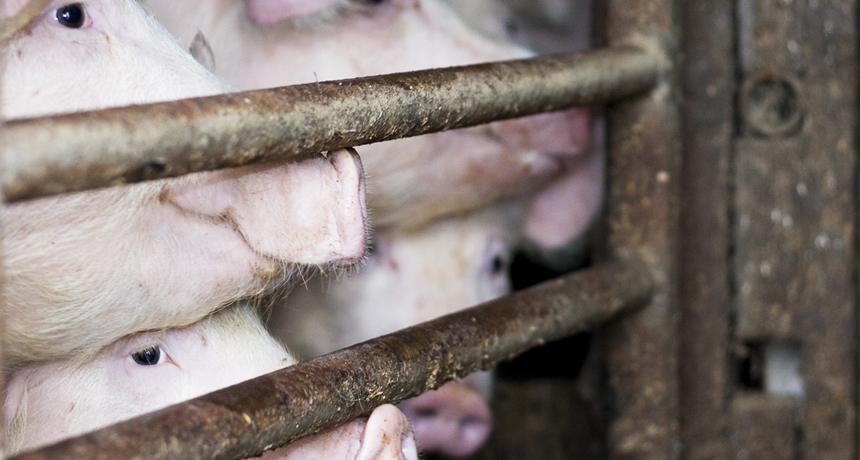
Pig farm workers are 6 times more likely to carry multidrug-resistant staph, study finds: http://ow.ly/MF9Un 


grist ‏@grist
We just hit 400 ppm CO2 in the atmosphere, for a whole month http://bit.ly/1ETjFFT 


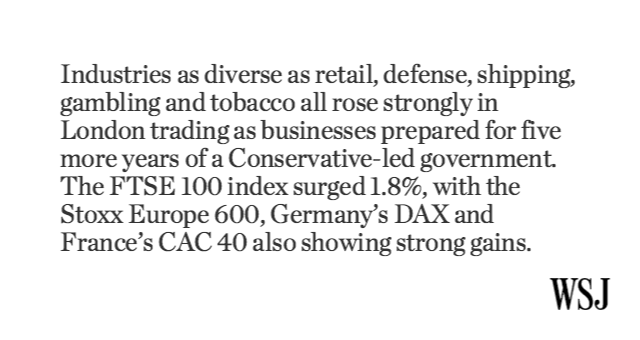
U.K. companies boosted by election results http://on.wsj.com/1EUAu3r


HuffPost Business

Our Conversation on the Challenges and Possibilities of the Next 10...

On Monday night we celebrated HuffPost's 10-year anniversary with a party at the Gramercy Park Hotel in New York City. And since HuffPost and Goldman Sachs have partnered for nearly three years to...
View on web

Arianna Huffington ‏@ariannahuff 15h15 hours ago

My conversation with Lloyd Blankfein on the challenges and possibilities of the next ten years http://huff.to/1Ees3xi #Next10 #HuffPost10

CBC Business ‏@CBCBusiness

Walmart buys 13 former Target locations in Canada http://www.cbc.ca/news/business/walmart-to-buy-13-former-target-canada-stores-and-a-distribution-centre-1.3066182?


Esquire Magazine ‏@esquire 4m4 minutes ago

20 Instagram Watch Accounts You Need To Follow http://www.esquire.com/style/mens-accessories/a34870/20-instagram-watch-accounts-you-need-to-follow-050715/?


BostonConsultingGrp retweeted
Doris Obermair ‏@DorisBCN

Must read to understand what #digital #disruption really means for businesses + organizations. Borges' Map by @bcg http://digitaldisrupt.bcgperspectives.com/?utm_source=201505BORGES&utm_medium=Email&utm_campaign=Ealert …


U.S. job growth regains steam, keeping Fed rate hike on track


Smallcappower.com ‏@smallcappower Apr 9

News, daily stock tips, CEO Interviews and Expert Advice from the industries most trusted small cap resource.


Real Estate Investors Seek Rising Industrial Strength