Greed and Capitalism

What kind of society isn't structured on greed? The problem of social organization is how to set up an arrangement under which greed will do the least harm; capitalism is that kind of a system.
- Milton Friedman

Tuesday, March 1, 2016

What Are Newmont Mining's Acquisitions Plans?


Newmont Says Every $100 Gold Gain Adds $350 Million to Cash Flow


  • `I'm very comfortable with our debt structure': CEO Goldberg
  • Company is still bullish on gold prices in long term


“I’m very comfortable with our debt structure overall,” Goldberg said. “We’re still bullish long term for gold.”

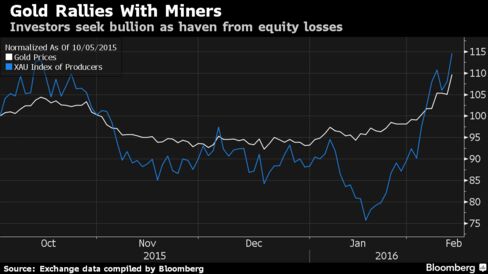
Gold advanced 10 percent since the end of January on Comex in New York, poised for the biggest February gain since futures trading data began in 1975. Turmoil across global equity and currency markets has sparked demand for a haven.

At the same time, there is increasing doubt that the Federal Reserve will move as quickly as it planned to raise rates because the expansion may weaken. That increases the allure of bullion as a store of value. Prices fell in the previous three years, reaching a five-year low in December as Fed officials increased borrowing costs for the first time in almost a decade.

“As long as real interest rates stay down below 3 percent a year, that’s generally good for gold,” Goldberg said. At “$1,200 or $1,300 an ounce, we still see it as a good price where we can deliver good free-cash flow and dividends back to shareholders."

While larger rival Barrick Gold Corp. has been selling assets, Newmont has responded to a prolonged slump in gold prices by continuing to expand. In June, the company agreed to buy the Cripple Creek & Victor mine in Colorado for $820 million and in October it announced plans to expand its Tanami operations in Australia.

Buying more assets would depend “on the value of the opportunity, if it makes sense long term,” Goldberg said in an interview on Bloomberg Television.


What Are Newmont Mining's Acquisitions Plans?


Link: http://www.bloomberg.com/news/articles/2016-02-29/newmont-says-every-100-gold-gain-adds-350-million-to-cash-flow


Warning of a Crash - strategy has become too popular


Opinion: ‘Smart-beta’ investing guru is now warning of a crash

Published: Feb 25, 2016


Rob Arnott says the popular strategy has become too popular


By

Columnist

Dump “quality” stocks and buy “value” stocks.

That’s the call from Rob Arnott, the legendary financial guru and chairman of Research Affiliates, an investment firm in Newport Beach, Calif.

He says stocks bearing high-quality characteristics — such as high profits, strong balance sheets and so on — have now become far too expensive in relation to the rest of the stock market.

Meanwhile, so-called “value” stocks — which generally mean boring companies that have low future growth prospects but are cheap in relation to current profits and dividends — are at one of their biggest discounts in modern history.
Arnott’s latest research is a salutary warning that smart beta, like anything, is subject to the laws of financial gravity, known in the trade as ‘mean reversion.’


Arnott’s call may be useful for investors looking to find the best bargains. But how he reaches this conclusion is equally fascinating.

The big trend in investing since the financial crisis has been the discovery of so-called “smart beta,” which means investing in stocks based on characteristics like low volatility, high quality and high momentum.

A ton of academic research has found that such strategies would have earned you higher returns with lower risk over many decades if you had followed them.

As a result, there’s been a flood of mutual funds, exchange traded funds and institutional portfolios designed to help investors profit from the “alpha” of “smart beta” — which is Wall Street jargon for saying they hope to make you lots of money.

Arnott was among the pioneers of this research, and is one of the most respected names in finance. So why has he turned against it?

Simple. Smart beta has become so popular, it’s now dangerous, he says. Indeed, a “smart-beta crash” is now “reasonably likely,” he warns.

A stock is worth only the present value of its future cash flow, just as, say, investment property is worth only the present value of its future net rents.

The more you pay for the investment, the less a bargain it is. During a mania, a fad or a bubble, people end up paying too much. So even though the future cash flow (or net rents) flow through, the investor loses money.

Historically, you’ve done very well if you invested in the stocks of companies that had high business quality (such as high profits, low debts, stability and so on), and in stocks that had low volatility. You made more money, with less risk, over time. Hence the rise of “smart-beta” strategies that targeted such stocks.

But as more people discovered these phenomena, they joined in the demand for smart-beta stocks – and drove up the price. At some point, while the business remains one with high quality or low volatility, the stock


 Source: http://www.marketwatch.com/story/smart-beta-investing-guru-is-now-warning-of-a-crash-2016-02-25


Monday, February 29, 2016

Warren Buffett: Don't make this mistake...


× Warren Buffett: Don't make this mistake... Embed this video Video Embed Size: 530 X 298 640 X 360 Warren Buffett: Don't make this mistake... 20 Hours Ago It's a terrible mistake when buyers sell stocks based on what they think businesses are going to do next month or next year, says Warren Buffett, Berkshire Hathaway CEO, the country...


Warren Buffett: Don't make this mistake...

20 Hours Ago


It's a terrible mistake when buyers sell stocks based on what they think businesses are going to do next month or next year, says Warren Buffett, Berkshire Hathaway CEO, the country...


Link: http://video.cnbc.com/gallery/?video=3000497592

Wednesday, February 17, 2016

Bad News For Fed, Good News For Gold - Jim Grant

Tough Times Ahead: Bad News For Fed, Good News For Gold - Jim Grant


 Link: http://www.kitco.com/news/video/show/Kitco-News/1170/2016-02-10/Tough-Times-Ahead-Bad-News-For-Fed-Good-News-For-Gold---Jim-Grant


Charcter


Tuesday, February 9, 2016

Gold

Embedded image permalink 
 
Gold has pushed above $1,200 an ounce, hitting a session high of $1,201.40, it highest level since mid-June, up more than 3.5% today

Monday, February 8, 2016

David Graeber: "DEBT: The First 5,000 Years" | Talks at Google


DEBT: The First 5,000 Years

While
the "national debt" has been the concern du jour of many economists,
commentators and politicians, little attention is ever paid to the
historical significance of debt.

For thousands of years, the
struggle between rich and poor has largely taken the form of conflicts
between creditors and debtors—of arguments about the rights and wrongs
of interest payments, debt peonage, amnesty, repossession, restitution,
the sequestering of sheep, the seizing of vineyards, and the selling of
debtors' children into slavery. By the same token, for the past five
thousand years, popular insurrections have begun the same way: with the
ritual destruction of debt records—tablets, papyri, ledgers; whatever
form they might have taken in any particular time and place.

Enter
anthropologist David Graeber's Debt: The First 5,000 Years (July, ISBN
978-1-933633-86-2), which uses these struggles to show that the history
of debt is also a history of morality and culture.

In the throes
of the recent economic crisis, with the very defining institutions of
capitalism crumbling, surveys showed that an overwhelming majority of
Americans felt that the country's banks should not be rescued—whatever
the economic consequences—but that ordinary citizens stuck with bad
mortgages should be bailed out. The notion of morality as a matter of
paying one's debts runs deeper in the United States than in almost any
other country.

Beginning with a sharp critique of economics
(which since Adam Smith has erroneously argued that all human economies
evolved out of barter), Graeber carefully shows that everything from the
ancient work of law and religion to human notions like "guilt," "sin,"
and "redemption," are deeply influenced by ancients debates about credit
and debt.

It is no accident that debt continues to fuel
political debate, from the crippling debt crises that have gripped
Greece and Ireland, to our own debate over whether to raise the debt
ceiling. Debt, an incredibly captivating narrative spanning 5,000 years,
puts these crises into their full context and illuminates one of the
thorniest subjects in all of history.

ABOUT THE AUTHOR

David
Graeber teaches anthropology at Goldsmiths College, University of
London. He is the author of Towards an Anthropological Theory of Value,
Lost People, and Possibilities: Essays on Hierarchy, Rebellion, and
Desire.

This talk was hosted by Boris Debic on behalf of the Authors@Google program.

  • Category Education


  • License - Standard YouTube License


Saturday, February 6, 2016

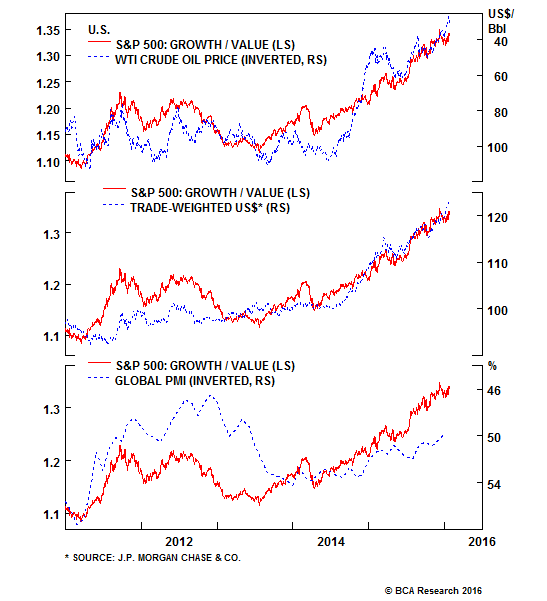
Growth over Value


U.S. equities - Does it still make sense to favor growth over value? Find out more....
Embedded image permalink


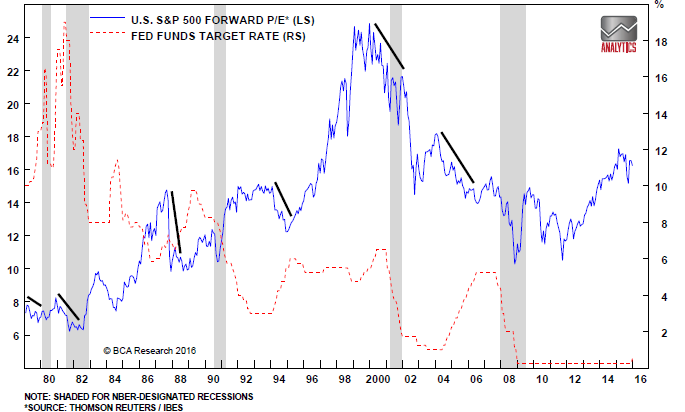
What's in store for Global Equities in 2016? Find out what BCA is saying:
Embedded image permalink


BCA Research

@bcaresearch

BCA is a leading independent provider of global investment research. Founded in 1949.
Montreal, Quebec
Joined August 2010


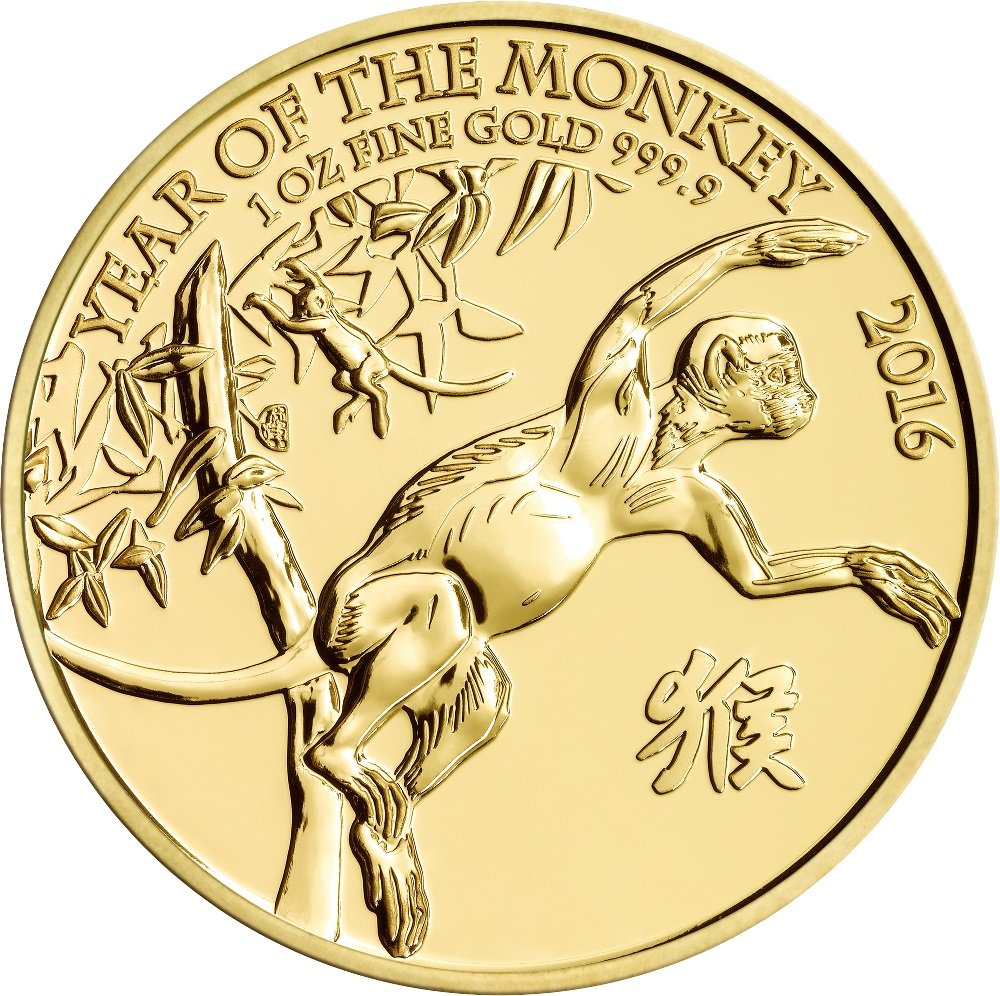
Year of the Monkey:


Embedded image permalink


Year of the Monkey: Could 's New Year Rally Continue? | |


Nouriel 'Dr. Doom' Roubini Is Grim Again - the new normal


OPINION: Nouriel 'Dr. Doom' Roubini Is Grim Again; Could He Be Positive on Gold?


Friday February 05, 2016 12:21


(Kitco News) - Dr. Doom is back, and so is his grim outlook on the global economy. 
But, could this mean he is finally positive on gold?

Famed economist Nouriel Roubini says the signs cannot be ignored anymore; the global economy is weak and has been in a “new abnormal” state, which doesn’t look to fade anytime soon.


“Welcome to the New Abnormal for growth, inflation, monetary policies, and asset prices, and make yourself at home,” he said in a post on Project Syndicate Thursday.

Since the start of the year, Roubini continued, the economy has been rattled by volatile financial markets, concerns over China, low global growth, emerging market turmoil, geopolitical tensions, Europe’s “identity crisis,” and deflation, to name a few.

This is the new normal – or abnormal – he is talking about.

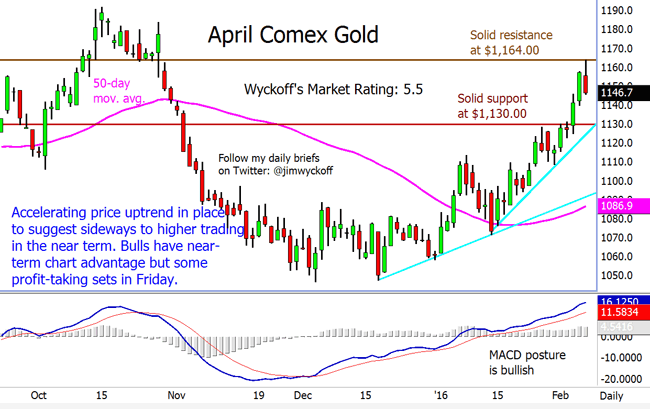
And, over this time frame, gold has shined. The new year has ushered in a positive gold market, with prices rallying to multi-month highs on the back of financial market volatility. Investors are concerned about the state of the global economy, with tumbling equity and oil prices pushing them towards safe-haven assets such as gold. This week, gold futures even pushed back above the 200-day moving average. April Comex gold futures managed to hit an intraday high of $1,164 overnight Friday, a level last seen in late October.

Market conditions so far in 2016 have proven to be gold positive.

Roubini said he expects, “It looks like we’ll be here for a while,” he said.

According to the NYU professor, one of the main reasons for this is the divergence between what’s happening on Wall Street versus what is actually happening in the economy.

“The real economy in most advanced and emerging economies is seriously ill, and yet, until recently, financial markets soared to greater highs, supported by central banks’ additional easing,” he said. “In fact, this divergence is one aspect of the final abnormality.”

As an example, Roubini highlighted the fact that financial markets haven’t reacted much as usual to growing geopolitical risks in the Middle East, Europe, Asia and Russia.

“Again, how long can this state of affairs – in which markets not only ignore the real economy, but also discount political risk – be sustained?” he questioned.

Another main contributing factor to this new normal, Roubini noted, is the fact that central-bank monetary policies have become increasingly unconventional.

“But now these unconventional monetary-policy tools are the norm in most advanced economies – and even in some emerging-market ones,” he said. “And recent actions and signals from the European Central Bank and the Bank of Japan reinforce the view that more unconventional policies are to come.”

These policies, many thought, would bring about hyper-inflation as central banks continued to balloon their balance sheets. Instead, policymakers are now focused on tackling the exact opposite – deflation. Another anomaly, Roubini emphasized.

One of the reasons for “ultra-low inflation,” according to Roubini, is “that banks are hoarding the additional money supply in the form of excess reserves, rather than lending it (in economic terms, the velocity of money has collapsed).”

“Moreover, unemployment rates remain high, giving workers little bargaining power,” he added.

As long as current market conditions and the divergence between markets and real life remains, Roubini’s new abnormal – which has so far proven to be gold’s friend – seems to be likely to stay.

By Sarah Benali of Kitco News; sbenali@kitco.com
Follow me on Twitter @SdBenali


Disclaimer: The views expressed in this article are those of the author and may not reflect those of Kitco Metals Inc. The author has made every effort to ensure accuracy of information provided; however, neither Kitco Metals Inc. nor the author can guarantee such accuracy. This article is strictly for informational purposes only. It is not a solicitation to make any exchange in precious metal products, commodities, securities or other financial instruments. Kitco Metals Inc. and the author of this article do not accept culpability for losses and/ or damages arising from the use of this publication.


Link: http://www.kitco.com/news/2016-02-05/Nouriel-Dr-Doom-Roubini-Is-Grim-Again-Could-He-Be-Positive-on-Gold.html


.....................................................................


Year of the Monkey: Could 's New Year Rally Continue? | |
Embedded image permalink